








Out of the multiple choices of settlement given to them after their exile from Tibet, the Tibetan Muslim community elders chose the ancestral land of Kashmir. The Government of India made arrangements for their smooth migration to Srinagar in Kashmir, and they were allotted temporary houses at Eidgah. It was a difficult time for this minority group, who came to this land without any proper livelihood in hand. Initially, 75 families from the community were settled in this settlement at Eidgah. One of the research participants, who was 12 years old at the time of their migration to Kashmir, remembers,
“We were a family of five, my parents and two sisters, and we had to share the same room with another family of six members. There was only one functional washroom for both males and females. It took years before more washrooms were constructed”.
At first, the only employment provided to the male members of the community was menial, as construction workers and temporary cleaners in the government transport department. It took some time to establish their small business of tailoring shops, and many of them got engaged in selling wooden sweaters and caps prepared by Tibetan women at the Sunday market of the centre Lal-chowk. With the minimal income they earned from these vocations, they could not arrange any other accommodation of their own. It was in the 1980s, with the intervention of the Dalai Lama, that a piece of land in the Hawal area of Srinagar was given to them on lease by the state government, where they could build additional houses. At Eidgah, only 40 families lived; the rest have shifted to new colonies. With their population growth, housing remains a problem in the new Tibetan colony at Hawal.
“When we shifted here, we were a family of four in this house with two rooms, a kitchen and a washroom, but now our family size has increased. Our children are married now, and they, too, have kids. We are managing here with utter difficulty”.
Most of the houses in the Tibetan colony of Hawal are two storeys, the ground floor being occupied by one family and the first floor by another. With fewer avenues available, the Tibetan Muslims started their small businesses in one of the rooms in their small accommodation. No proportionate gap exists between the houses, and no courtyard or parks are in front of them. In case of any calamity, such as an earthquake or fire, it will be havoc for the whole community. The colony is connected to the main road of Hawal through the narrow alleys, and it becomes difficult for the members of the community to move on rainy days or when it snows in the winter months. Imam Sahab of the mosque, who talked to us, said,
“We have the problem of property sanitation in this colony. We shifted here from Eidgah, but our problems continue. There is no proper drainage system. If you come here on a rainy day, you will not be able to walk through these alleys”.
The Municipal Corporation of Srinagar, which is otherwise very active in other areas of the city, fails to offer adequate sanitary services and repairs and construction of drains and lanes are hardly undertaken when damaged. The drains, roads, and streets are in a state of disrepair.
The primary challenge confronting the Tibetan Muslim minority in Kashmir stems from being non-state subjects. Even if some wished to buy a property in any part of the Kashmir valley or apply for government jobs, they could not. Although granted Indian citizenship immediately after their exile from Tibet, the community was not given the status of “state subjects” in the erstwhile state of Jammu and Kashmir. So, the community members could not buy or own a property in Srinagar, which was permitted only to the “state-subjects”. So, the Tibetan Muslim community living on a property on the lease was as good as any other citizens from other federal states of India with no property or employment rights. The state governments “categorisation” of their status as non-state subjects prevented Tibetan Muslims from enrolling in higher educational institutions as well as denied them jobs in the government sector. Despite identifying as citizens of India, individuals encounter significant challenges in acquiring the state-subject (domicile) certificate, a crucial document for applying to government positions in pre-2019 Jammu and Kashmir. Despite possessing documentation such as Voter ID and Aadhaar, members have issues regarding their identification and recognition.
“Many people in our community have State Subject, but it is difficult to make bureaucrats understand that we are also citizens of India; therefore, we prefer getting these certificates, although we have all other identification documents like Aadhaar and Voter ID card”.
Another respondent, on being asked about citizenship, added,
“Our children have an Indian passport and work in Gulf countries; how can a person who does not have citizenship have a passport? But it is very difficult to make authorities understand that we are Kashmiris”.
Even though the community members had voter’s identity cards and even cast their votes for the state assembly and parliamentary elections, successive regimes failed to grant them the status of “state-subject”. It was recently, after the reconstitution of the state of Jammu and Kashmir into a Union Territory and the abrogation of its Special Status under Article 370 of the Indian Constitution by the right-wing ruling party of India, that state-subject laws were changed. Like everyone else, the members of the Tibetan Muslim community can attain the “Domicile certificate”, making them eligible for property rights and applying for positions in government offices. Until we conducted the fieldwork for this research work, there was no report from the community of anyone buying land, houses, or shops in their name, nor was there any news of anyone from the community getting any jobs. Most of the members during interviews talked about the potential of a Domicile certificate to change their socio-economic lives in future, but they were equally showing their displeasure for the abrogation of the “special status” of Jammu Kashmir that was granted under Article 370.
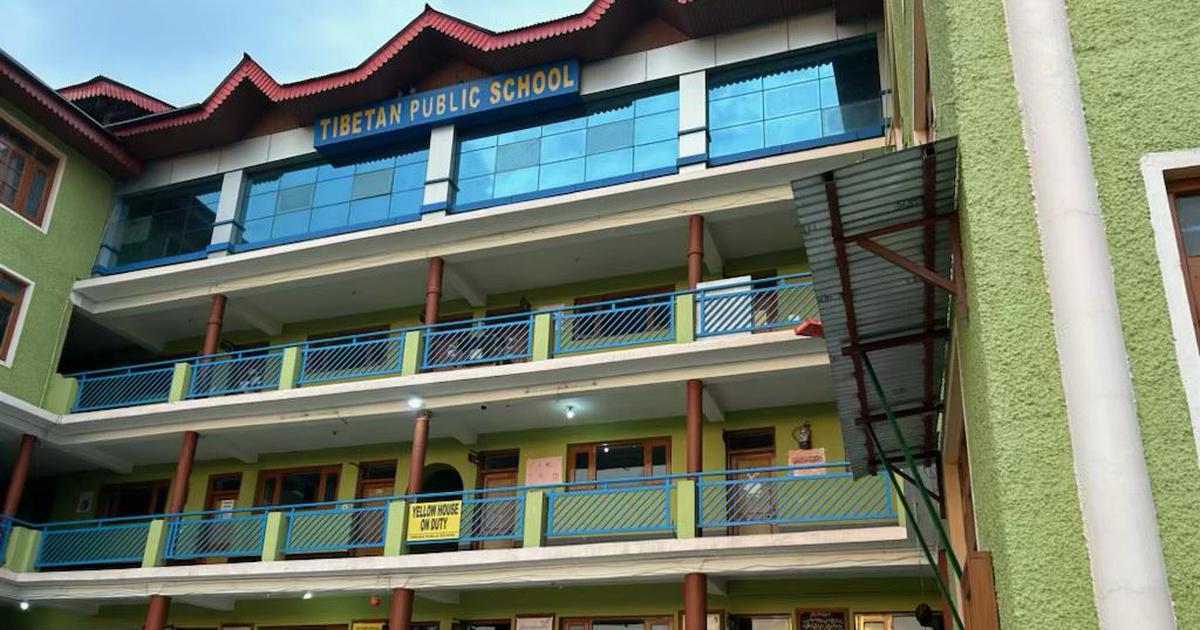
Additionally, the lack of education at higher levels proves an obstacle for the youth in getting employment in private firms or applying for private jobs outside the Kashmir valley. Though the Tibetan Public School made huge strides in imparting education to children from the community, mostly, as observed in the field, the young Tibetans seldom pursue further education. Either they get involved in their family business of Tila Dozi (weaving silver thread into the fabric of pharen or shawl) or running restaurants or working as salesmen at other community members’ shops. Tibetan Muslims have become accustomed to low-status employment, which has caused them to lose their sense of self as workers and acquire a focus on instrumental work. Some of the young male members who have done short-term computer courses from private institutions in Delhi or Darjeeling were able to get jobs in Dubai and Saudi Arabia. One of the research participants very proudly spoke about his son’s job in Dubai,
“My son completed his schooling here in Tibetan Public School, and after that, he went to a relative’s place in Darjeeling, where he was able to complete a computer course. He got a job in a private company in Dubai. He comes once in a year. He will be married here, and his wife will also accompany him”.
In contrast to men, more women from the community have graduated from nearby colleges. Educated women predominantly work at private schools or assist their mothers at home. Older women and men are impoverished and lack access to pensions, financial support, and other resources available to other senior individuals in the state. The Tibetan population cannot access several government projects and provisions intended for the populace. They possess a profound sense of being discriminated against by the state government on numerous grounds.
Moreover, Tibetan Muslims encounter questions vis-à-vis their identity. There is an emergence of intergenerational identity on the one hand; adults among them strongly feel that they would never abandon their Indian nationality, while the majority of the young Tibetans think that they should seek greater solidarity with the Tibetans under the Dalai Lama. On the one hand, Tibetan Buddhist refugees settled in other parts of India consider Tibetan Muslims as “lesser” or “non-Tibetans” due to their non-Buddhist faith, their ancestry and the citizenship rights which were granted to them, while on the other hand, they have not been fully accepted as a part of the larger Kashmiri community.
In Kashmir, they are perceived more as Tibetans with different racial features, language and customs. Therefore, as a community, Tibetan Muslims encounter an identity crisis, where they are stripped of their Tibetan identity, excluded from any formal position in the Tibetan government-in-exile and in Kashmir, they still continue to be seen as the “other” and “outsiders”; thus, recognised neither by the land they had left nor by the homeland to which they had fled. After their settlement in Kashmir from the 1960s onwards, Tibetan Muslims have had to deal with the dominant Kashmiri culture manifested in language, food habits and options of livelihood. While influences of popular Kashmiri culture, including language, are marked among the Tibetans, a sense of being distinct is prevalent. Though the political reality of the prevalence of a dominant Kashmiri culture in the valley cannot be ignored, it has been differently negotiated and resisted by other minorities like the Pashto community, as discussed in the earlier chapter. Here, the Tibetan Muslims have made their choices of adopting those things from Kashmiris living in the neighbourhood, which does not take away their own identity, thus avoiding the “Sanskritisation” that many minorities in South Asia experienced.
Living amid the dominant Kashmiri-speaking local Muslims, with limited avenues of livelihood, this minority community negotiates for the survival and safeguarding of their hybrid culture of being Tibetan and Muslim with Kashmiri ancestry. Facing economic challenges, this minority community has also been thriving in diversifying its economic enterprise by adopting different vocations suited to the social fabric of the Kashmiri society. The following few sections of the chapter focus on the small acts of resilience by the community to maintain their distinct identity, to live cordially with the local Kashmir community and to achieve economic autonomy.
Excerpted with permission from Identity, Dispossession and Resilience of the Subaltern: A Study of Marginalised Communities in Kashmir, Khalid Wasim Hassan, Deepanshu Mohan, Ishfaq Ahmad, and Najam Us Saqib, Routledge.
